

No IELTS? No Problem! Study in Australia with Our Admission Tips
The IELTS Barrier Many aspiring students have been put off from studying in Australia because of the IELTS requirement. This has been…

This guide will explore the top 10 European countries that stand out as the best choices for international students in 2026. Our selection is based on key factors such as education quality, cultural experience, and career prospects.
In this article, you can expect to:
Germany remains one of the best European countries to study and work for international students in 2025. Its combination of no or low tuition fees, excellent academic programs, and a high standard of living makes it an attractive destination worldwide.

Engineering disciplines (mechanical, electrical, automotive) dominate applications. Natural sciences such as physics and chemistry also draw international students. Business and computer science programs are growing in English-taught offerings.
A rising number of courses are offered entirely in English, especially at the master’s level. Bachelor’s programs often require proficiency in German, but many preparatory language courses exist.
Graduates can apply for an 18-month residence permit to seek employment related to their degree in Germany. This policy encourages the retention of skilled talent within the country’s workforce.
The Friedrich Ebert Stiftung Scholarship supports international students with financial aid based on academic merit and social engagement. Other scholarships target specific fields or countries.
Vibrant student communities thrive in cities like Munich, Berlin, and Heidelberg. Historic landmarks such as Neuschwanstein Castle blend with dynamic arts scenes and festivals. Efficient public transport connects students to cultural experiences beyond campus life.
France stands out as an attractive destination for international students due to its prestigious institutions and rich cultural background. Leading universities like Sorbonne University and École Polytechnique offer high-quality education across various disciplines. In terms of affordability, France provides a cost-effective environment with accessible public transportation systems, making it easier for students to explore the country.
Moreover, the diverse range of popular academic programs in arts, business, and sciences caters to different student interests, ensuring a fulfilling educational experience. With an increasing number of English-taught programs, language barriers are minimised, enhancing the accessibility of education in France for international students.
In addition to academic benefits, post-study work prospects in France are promising, supported by favourable visa regulations that facilitate the transition from study to employment. For those seeking financial assistance, scholarships are available to help ease the financial burden of studying abroad.
Furthermore, cultural immersion opportunities abound in cities like Paris and Lyon, offering students a chance to experience the rich heritage and vibrant lifestyle that France has to offer. This combination of academic excellence, affordability, post-study opportunities, and cultural experiences makes France a compelling choice for international students looking to broaden their horizons.
The Netherlands is a popular destination for international students seeking top-notch education and a vibrant cultural scene. With its high standard of living and focus on social progress, the country consistently ranks high in global social purpose indexes, making it an attractive option for those who value both education and community engagement.

Some of the well-known universities in the Netherlands include:
Studying in the Netherlands has moderate tuition fees compared to other Western European countries. For non-EU international students, the average annual tuition ranges from €6,000 to €15,000, depending on the program and university. As for living expenses, students can expect to spend around €900 to €1,200 per month on accommodation, food, transportation, and leisure activities.
Dutch universities offer a wide range of English-taught programs, particularly in:
This accessibility makes the Netherlands an ideal choice for students seeking quality education without requiring fluency in Dutch.
International graduates have the opportunity to benefit from the Orientation Year (zoekjaar) permit, which allows them to stay in the Netherlands for up to 12 months after graduation to search for employment or establish a business. This visa is highly advantageous as it does not necessitate a job offer at the time of application.
Several scholarships are available to support international students pursuing higher education in Dutch institutions:
Student life in Dutch cities combines tradition with modernity. University towns like Amsterdam and Delft offer:
The Netherlands stands out among the 10 Best European Countries for International Students in 2025 by offering accessible education alongside an inclusive social environment conducive to personal growth and academic achievement.
The United Kingdom is home to some of the most prestigious universities in the world, including Oxford and Cambridge, which are renowned for their research programs. While the cost of living in the UK can be higher compared to other countries, students have access to excellent healthcare services and comprehensive support systems on campus.
Tuition fees in the UK vary depending on the university and course of study. Prospective students need to research and understand the specific costs associated with their chosen institution and program.
The UK offers a wide range of academic programs across various disciplines, making it an attractive destination for international students. Some of the popular fields of study include:
One significant advantage of studying in the UK is that English is the primary language of instruction. This linguistic accessibility can be beneficial for international students who are proficient in English or looking to improve their language skills.
After completing their studies, international students in the UK have the opportunity to work through post-study work visas. The Graduate Route scheme allows graduates to stay in the UK for up to two years (or three years for doctoral graduates) to gain work experience and explore career opportunities.
For students seeking financial assistance, there are scholarship opportunities available in the UK. The Chevening Scholarship, for example, is a prestigious award that supports outstanding individuals from around the world to pursue postgraduate studies in the UK.
UK universities are known for their cultural diversity, with students from various backgrounds and nationalities coming together to create a vibrant learning environment. Additionally, universities offer robust student support services such as counselling, academic advising, and orientation programs to help international students adjust to university life.
Ireland is an increasingly popular choice for international students seeking a world-class education. Its combination of top universities, welcoming environment, and vibrant culture makes it an attractive destination for those looking to study abroad.

Ireland offers a warm and inviting atmosphere for international students, blending modernity with a rich historical heritage.
Renowned universities like Trinity College Dublin and University College Dublin provide exceptional academic opportunities and cultural experiences.
While tuition fees vary based on the program and institution, the cost of living in Ireland can be moderate to high, depending on the city.
International students often flock to programs in technology, humanities, and business due to Ireland’s strong reputation in these fields.
English serves as the primary language of instruction in Irish universities, facilitating an accessible learning environment for non-native speakers.
Graduates have access to post-study work permits in Ireland, allowing them to explore career options after completing their studies.
Various scholarships are offered to international students looking to study in Ireland, providing financial support and recognition for academic excellence.
Irish universities emphasise community engagement and extracurricular activities, fostering a supportive environment for personal growth and networking opportunities.
Finland is an excellent choice for international students looking for a peaceful and high-quality educational experience. Here’s why:

Finland offers a tranquil setting with a high standard of living, making it an attractive destination for international students seeking a peaceful academic environment.
The University of Helsinki is a leading institution known for its research excellence and academic prestige, providing students with top-notch educational opportunities.
Students can benefit from affordable education in Finland compared to other European countries, coupled with reasonable living costs that make studying there economically feasible.
Finnish universities emphasise sustainability in their academic offerings, allowing students to engage in environmentally conscious programs and research initiatives.
International students have the advantage of studying in English-taught programs across various disciplines, eliminating language barriers and enhancing the learning experience.
Upon completing their studies at a Finnish university or college, graduates are supported by favourable visa policies that enable them to explore employment opportunities and contribute to the local workforce.
International students can enjoy a holistic educational experience in a serene environment, benefitting from top-tier research institutions, affordable education, and a strong focus on sustainability. Finland stands out as a prime choice for those seeking academic excellence amidst a backdrop of natural beauty and cultural richness.
Spain stands out as a vibrant destination for international students seeking quality education combined with an attractive climate and rich cultural heritage. Its welcoming atmosphere and diverse student communities make it a popular choice for those who want to study abroad.
Spanish universities offer competitive tuition fees, making Spain one of the most cost-effective options in Western Europe. Living expenses, including accommodation, food, and transportation, are generally lower compared to other major European countries.
The University of Barcelona is a flagship institution renowned for its research output and academic excellence. Other notable universities include Complutense University of Madrid and Pompeu Fabra University in Barcelona.
Arts, humanities, business administration, tourism management, and social sciences are among the most sought-after programs by international students in Spain.
Many programs are offered both in Spanish and English. This flexibility allows international students to improve their Spanish language skills while having access to courses taught in English.
Spain provides pathways for graduates to stay and work after completing their studies. The Tarjeta de Estudiante (student residence card) can be extended to allow job searching or work related to your field for up to 12 months post-graduation. This supports career development within the Spanish labour market or the broader European Union.
Several scholarships are available from both Spanish government bodies and universities:

Living in Spain means immersing yourself in a lively student lifestyle enriched by festivals, music, art exhibitions, and historic architecture. Cities like Barcelona and Madrid boast diverse culinary scenes, beaches, parks, and vibrant nightlife. Student organisations frequently host cultural events that help you connect with peers from around the world.
Studying Spain, international students appreciate the balance between affordable education abroad and an enriching cultural experience that enhances personal growth alongside academic achievement.
Switzerland offers an exceptional blend of natural beauty and high-quality education, making it a favoured destination to study. Internationals appreciate Switzerland for both its academic excellence and lifestyle.
Living in Switzerland means access to breathtaking landscapes combined with vibrant city life.
Studying here means immersing yourself in both a rigorous academic environment and one of Europe’s most picturesque settings.
Poland stands out as a budget-friendly option among European countries, making it an ideal choice for international students looking for quality education without overspending. Here are the key points to consider:
Compared to other European destinations, Poland offers affordable study options with reasonable living costs, allowing students to manage their expenses effectively.
The country has witnessed a surge in English-taught programs across various disciplines, enabling international students to pursue their desired fields of study with ease.
Polish universities offer competitive tuition fees, coupled with a lower cost of living compared to Western European countries, making education more accessible.
From business and engineering to arts and humanities, Poland provides a diverse range of popular programs tailored to meet the needs and interests of international students.
Understanding the visa requirements and application process is essential for a smooth transition to studying in Poland, ensuring compliance with regulations.
International students can explore numerous scholarship opportunities in Poland, easing financial burdens and enhancing access to higher education.
Embracing a vibrant student community, Poland offers a rich cultural experience, bustling city life, and historical charm that contribute to a well-rounded academic journey.
By choosing Poland as your study destination, you not only invest in a quality education but also immerse yourself in a dynamic cultural landscape that fosters personal growth and exploration.
Hungary offers affordable study abroad options that attract international students seeking quality education without high costs. The country’s universities blend a rich historical backdrop with modern academic programs, making it an appealing destination.
Tuition fees in Hungary are notably reasonable compared to Western Europe, typically ranging between €1,000 and €5,000 per year, depending on the program and institution. Budapest, the capital, is steeped in history, featuring stunning architecture and vibrant cultural scenes that enrich your student experience.
Top institutions include:
Many programs are offered in English, covering fields such as business, medicine, engineering, and the arts.
Hungary boasts a lower cost of living than many European countries. Monthly expenses average around €400–€700, covering accommodation, food, transport, and leisure activities. This affordability allows you to enjoy city life without financial strain.
Several scholarships support international students:
Non-EU students must apply for a student visa (type D) before arrival. The process includes providing proof of enrollment, sufficient funds, and health insurance. After graduation, Hungary offers post-study work permits up to 9 months to find employment or start a business.
Hungary’s rich cultural tapestry includes:
The combination of affordability, diverse academic offerings, and vibrant culture makes Hungary a compelling option for your study abroad journey.
Explore a clear snapshot to compare European countries’ study abroad cost,s quality post-study work opportunities. This table highlights key factors like tuition fees, cost of living, visa ease, and language accessibility across the top 10 destinations.
| Country Tuition Fees (Approx.) Cost of Living (Monthly), Visa & Post-Study Work, Ease Language Options, Germany | Low to No Tuition | Moderate (€800 – €1,000) | Good post-study work visas | German + Many English programs |
| France | Moderate (€200 – €3,000) | Higher (€900 – €1,200) | Simplified visa process for graduates | French + Growing English offers |
| Netherlands | Moderate to High (€1,000 – €15,000) | High (€900 – €1,300) | Strong post-study work rights | Dutch + Extensive English courses |
| United Kingdom | High (£10,000 – £38,000) | High (£1,000 – £1,500) | Graduate Route visa available | English only |
| Ireland | Moderate (€9,000 – €25,000) | Moderate (€900 – €1,200) | Favourable post-study employment visas | English only |
| Finland | Low to Moderate (€0 – €18,000) | Moderate (€700 – €1,100) | Supportive graduate work permits | Finnish/Swedish + English |
| Spain | Low to Moderate (€1,000 – €3,500) | Lower (€700 – €900) | Gradual improvement in work opportunities | Spanish + Increasing English |
| Switzerland | High (CHF 1,000 – CHF 4,000)* | Very high (CHF 1,500+) | Entrepreneurship-friendly post-study options | German/French/Italian + Some English |
| Poland | Low (€2,000 – €4,000) | Low (€500 – €800) | Simplified visa with a growing job market | Polish + Many English programs |
| Hungary | Low (€1,500 – €5,000) | Low (€500 – €800) | Flexible visa rules for graduates | Hungarian + Many English courses |
*Swiss tuition fees vary by institution and program.
Points to note:
This comparative view can assist you in balancing academic quality with financial and lifestyle priorities when choosing your ideal European study destination.
Selecting the best European country to study abroad involves aligning your choice with what matters most to you. Use these tips to make an informed decision from the 10 Best European Countries for International Students in 2026: A Comprehensive Guide:
Choosing wisely means balancing academic ambitions with practical considerations, ensuring your study abroad experience is rewarding both personally and professionally.
Navigating the application process and visa requirements can be challenging for international students aspiring to study in Europe. This guide provides essential information on the application process, visa documentation requirements, health insurance mandates, tips for securing acceptance letters and language certificates, as well as an overview of post-arrival registration processes.
Understanding the application timelines is crucial for international students planning to study in Europe. Here are the typical application timelines for university admissions:
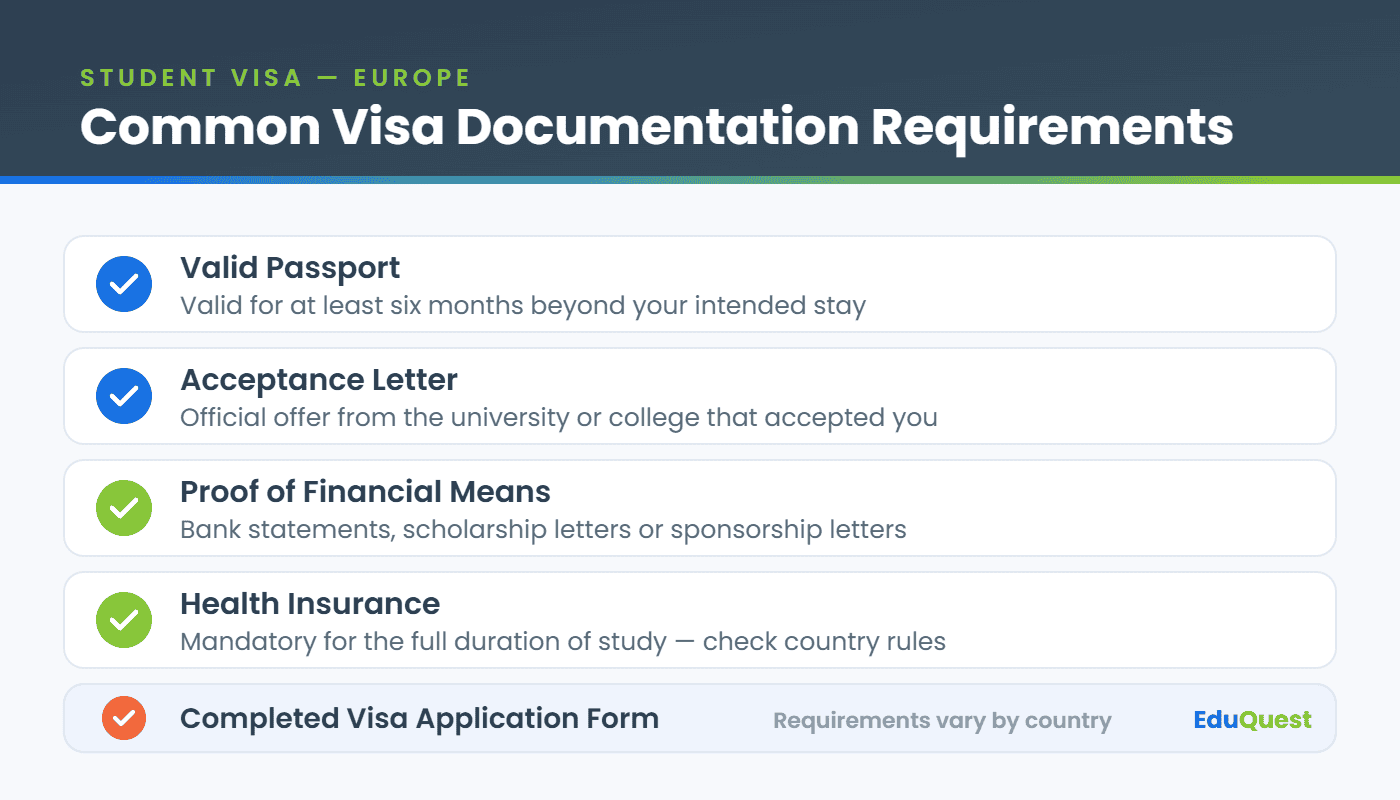
When applying for a student visa in Europe, there are certain documents that you will typically need to submit. While specific requirements may vary by country, here are some common visa documentation requirements:
Health insurance is a crucial aspect of studying abroad, and many European countries have specific health insurance mandates for international students. Here are some key points to keep in mind regarding health insurance:
Securing acceptance letters from universities and obtaining language certificates can significantly enhance your chances of getting a student visa. Here are some tips on how to go about it:
After arriving in Europe as an international student, there are certain registration processes that you may need to complete. These processes vary by country but generally include:
By understanding these application processes and visa essentials, international students can better prepare themselves for studying in Europe in 2026 and beyond!
The IELTS Barrier Many aspiring students have been put off from studying in Australia because of the IELTS requirement. This has been…
The UK Dependent Visa undergoes significant changes in 2025, impacting applicants from South Asia, Africa, and the Middle East. Understanding these new…
Bangladeshi students face numerous challenges when pursuing higher education abroad. These hurdles range from selecting the right universities and courses to navigating…

Tell us what you want to study and where. A counsellor from your nearest office will call you within one business day.
AI answers can be wrong — a counsellor confirms details before you apply.